Links golf gives you more uneven lies than almost any other kind of course, and the wind makes each one harder. The way through is to keep the ball low, allow for the slope and the wind together, take more club and swing easier, and get comfortable with the putter and the bump and run from off the green. Flat lies on a links are a bonus, so plan for the slope every time.
If you mostly play parkland golf, your first few rounds on a proper links can be a shock. You hit a good drive down the middle and find the ball sitting in a hollow with your feet on a hump. That's normal. It's how links courses are built, on old sand dunes with firm, fast-draining turf that never got levelled.
What makes links lies different
The ground is firm. On a parkland course a ball tends to stop roughly where it lands. On a links it keeps rolling, and it rolls downhill. So balls collect in hollows, at the bottom of slopes and at the base of humps. The flat-looking fairway from the tee often turns out to be a series of small ripples.
The slopes are small but frequent. You'll get plenty of lies that are a bit of everything, slightly uphill with the ball a touch above your feet, for example. These combined lies are the norm. The four uneven lies explained post is useful for working out what you've got.
The lies are tight. Firm turf means the ball often sits on thin grass with not much under it. That makes clean contact more important, and a fat shot more punishing.
The wind is always there. And the wind changes what the slope does.

Wind and slope together
This is the bit that catches people out. A slope gives the ball a tendency, and the wind can either add to it or cancel it.
For a right-hander, ball above your feet tends to go left. Put a right-to-left wind on top of that and you've got two things pushing the same way. Aim well right and accept the ball will move a lot. Put a left-to-right wind against it and they may roughly cancel, which can make the shot straighter than you expect.
Same with up and downhill. A downhill lie flies the ball lower. Into the wind, that lower flight is actually helpful. An uphill lie launches it higher, and a high ball into a links wind can balloon and fall out of the sky. The post on wind and slope combining goes through the main combinations.
Don't overthink it on the course. Ask two questions: which way does the slope send it, and which way does the wind send it. If they agree, allow more. If they disagree, allow less.
Keep it low
Most links golf comes down to controlling trajectory, and that matters even more from slopes.
A lower shot spends less time in the wind and is less affected by the curve the slope puts on it. So on a sloping lie on a links, it often pays to take more club, grip down, play the ball a touch further back than you otherwise would for that lie, and make a shorter, smoother swing. There's an old saying in links golf, "when it's breezy, swing easy", and it fits slopes as well. A hard swing adds spin and height, which the wind loves.
Be careful with ball position on uphill lies. The slope already wants the ball forward. You can still keep the flight down by taking more club and shortening the finish rather than shoving the ball back.

Around the greens
Links greens usually have run-offs, swales and banks. You'll often be chipping from a slope, or from tight turf just off the green with a bank between you and the flag.
The friendliest option is often the putter. If the ground between you and the hole is firm and fairly smooth, putting from off the green takes the slope and the strike out of it. A low bump and run with a 7 or 8-iron is the next choice. Both are less likely to go badly wrong than a lofted pitch from a tight, sloping lie.
Save the high wedge for when you genuinely need to carry something.
Pot bunkers and odd stances
Links bunkers are often small and deep with steep faces. The ball tends to roll into the middle, but you'll still get plenty of shots where your feet are outside the bunker and the ball is in, or where you're standing on a slope inside it. For those, the post on the ball in the bunker with your feet outside covers the stance. If the face in front is too steep, go out sideways or backwards. It happens to everyone on a links.
A few habits that help
- Look at your lie before you look at the flag. On a links, the lie dictates the shot more often than the yardage does.
- Plan for the bounce. On the tee and on approach shots, think about where the ball will finish as well as where it lands. Avoid landing areas that feed into hollows if you can.
- Expect awkward stances and stay patient. A few bad lies per round is part of the game here. You'll get some lucky ones too.
- Practise from slopes before the trip. If you're heading to a links for a golf break, a few sessions hitting from tilted lies beforehand will pay back.
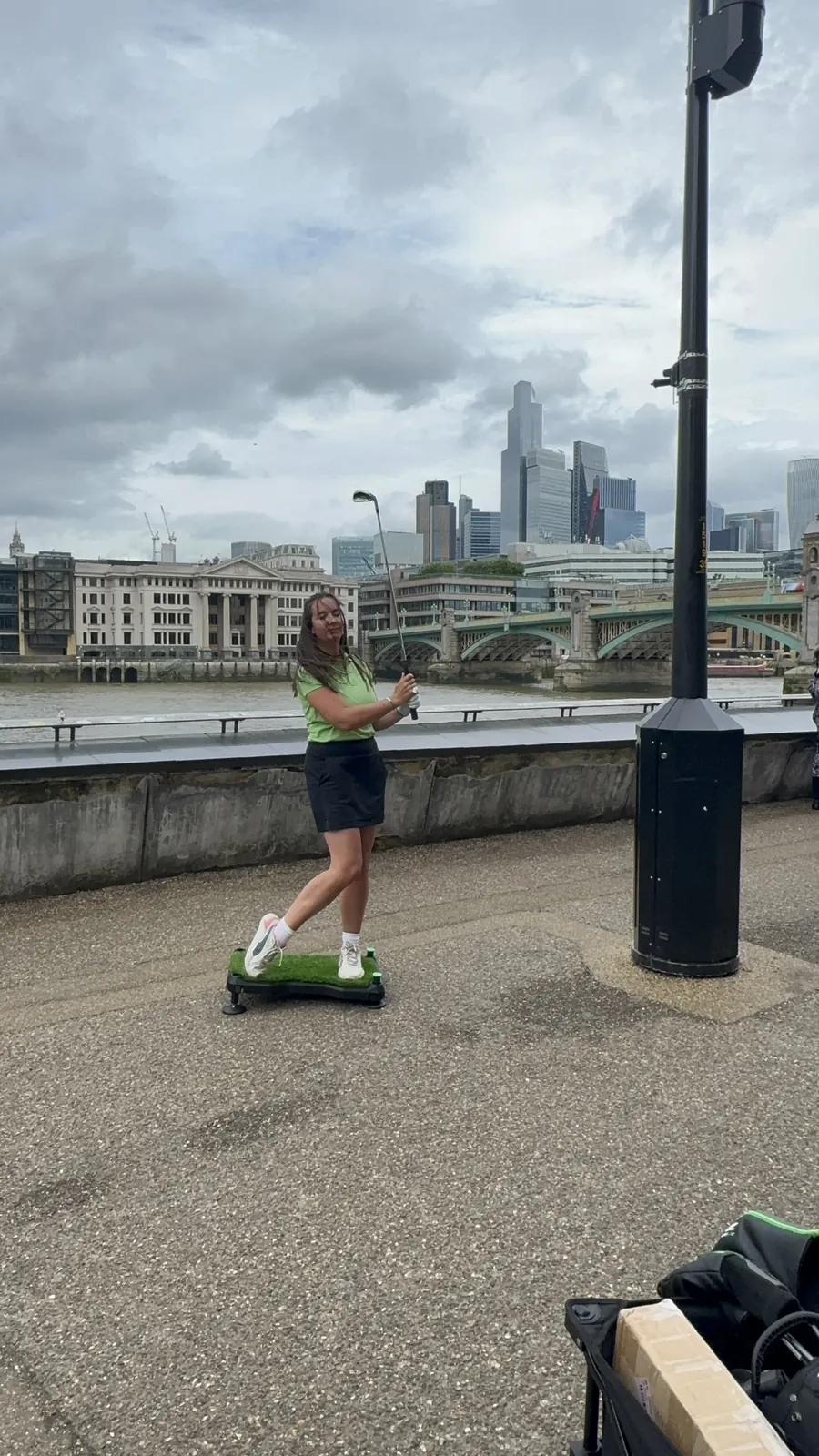
That last one is hard if your home course and range are flat. Libro is a portable platform that sets uphill, downhill and sidehill lies in seconds, so you can work on the low, controlled shots links golf needs from the same kind of slopes you'll find in the dunes. Reserve one for £10, fully refundable.